- Executing Management-intensive Grazing (MiG) protocols tailored to ovine dentition and close-grazing behavioral instincts.
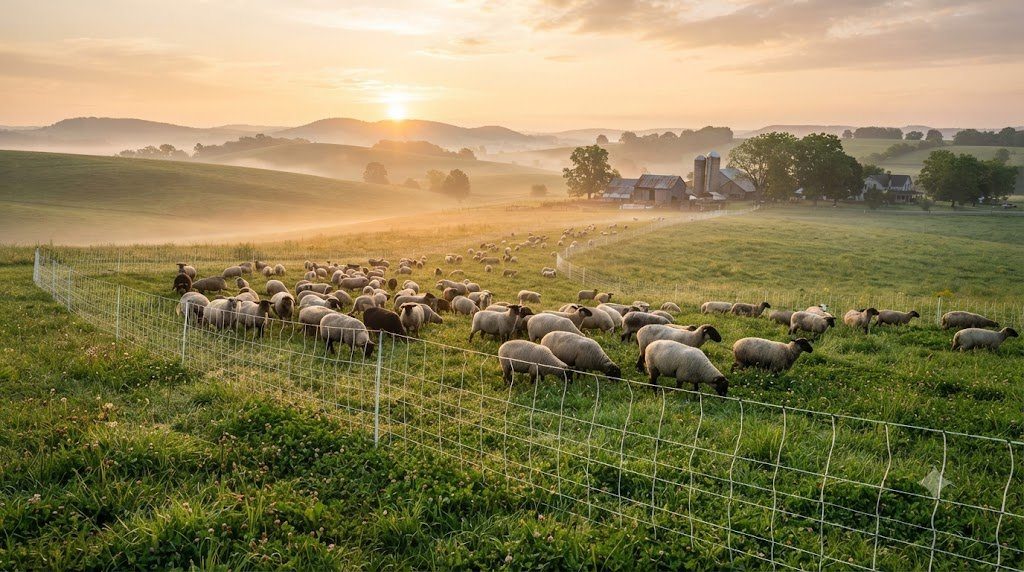
- Deploying portable solar electric netting systems energized to 5,000+ volts for flexible 1-to-3 day paddock rotations.
- Maintaining sward height targets: entering pastures at 6 to 8 inches and leaving 3-inch residual to protect root carbohydrates.
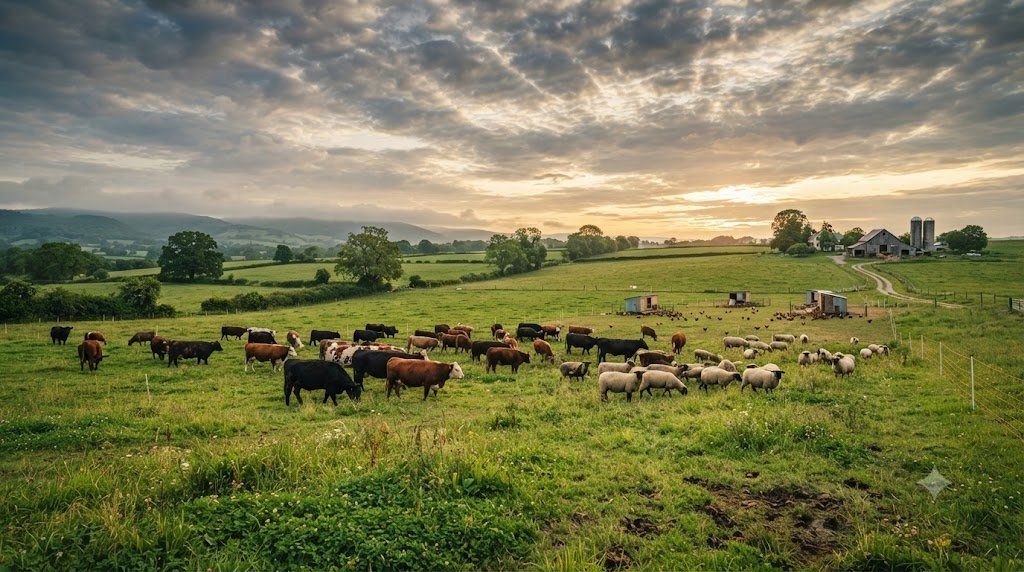
- Capitalizing on multi-species co-grazing with beef cattle to vacuum sheep parasite larvae and maximize pasture dry matter utilization.
- Formulating drought reserves and stockpiled winter fescue grazing to slash conserved forage feeding costs by 40%.
1. Ovine Grazing Physiology and Sward Harvesting Mechanics
Sheep possess specialized oral anatomy that makes them uniquely effective—and potentially destructive—grazers. Unlike cattle, which lack upper incisors and wrap a muscular tongue around tall forage to rip it from the plant crown, sheep possess eight sharp lower incisors that close against a hard, cartilaginous upper dental pad. Combined with a narrow muzzle and flexible split upper lips, sheep are capable of selectively biting individual plant leaves and shoots at ground level.
This close-grazing ability allows sheep to harvest tender, highly digestible vegetative leaf blades containing over 20% crude protein and 70% Total Digestible Nutrients (TDN). However, under continuous unmanaged grazing, sheep will repeatedly bite the re-emerging regrowth of palatable legumes and grasses every 3 to 5 days, exhausting root carbohydrate reserves, destroying the pasture sward, and creating bare soil vulnerable to erosion and weed invasion.
Management-intensive Grazing (MiG) harnesses the sheep’s harvesting efficiency while protecting pasture biology. By concentrating flock grazing pressure on small paddocks for brief durations (24 to 72 hours) followed by adequate physiological rest periods (21 to 45 days), producers maintain pastures in an active vegetative growth phase that optimizes seasonal dry matter production.
The Take Half, Leave Half Principle in Ovine Swards
A fundamental grazing rule dictates: ‘Take half, leave half.’ For cool-season grass swards (orchardgrass, perennial ryegrass, tall fescue, white clover), ewes should be moved into paddocks when forage reaches 6 to 8 inches in height. Grazing must cease and sheep must be moved when residual stubble reaches 3 inches.
Grazing below 3 inches triggers three severe negative consequences: first, it forces sheep to consume internal parasite larvae concentrated in the bottom layer of the sward; second, it removes photosynthetic leaf area, forcing the plant to draw on root carbohydrates to regrow; and third, it exposes the soil surface to sunlight, increasing soil evaporation and weed seed germination.
Never force sheep to graze below 3 inches. Over 90% of infective barber pole worm larvae live in the first 2 inches of grass. Moving sheep at 3 inches leaves the parasite larvae behind, reducing herd worm burdens without chemical intervention.
2. Portable Electric Netting Engineering and Power Systems
Flexible rotational grazing requires lightweight, reliable cross-fencing infrastructure. The modern industry standard is electrified sheep netting (electro-netting).
Electro-netting consists of prefabricated 164-foot (50-meter) rolls of flexible polyethylene twine interwoven with stainless steel conductor wires, supported by built-in step-in plastic or fiberglass posts. Netting for sheep should measure 35 to 42 inches in height, featuring a graduated vertical mesh spacing (smaller openings at the bottom, wider at the top) that prevents lambs from crawling through.
Powering sheep netting requires substantial fence energizer capacity. Because sheep possess thick, non-conductive wool or hair coats and hooves that provide high electrical resistance, a weak spark will not deter them. Energizers must produce a minimum output of 5,000 to 7,000 volts on the fence line, backed by a minimum energizer rating of 1.0 to 3.0 joules of stored energy per 3 to 5 rolls of netting. Grounding is the most frequent point of failure; install at least three 6-foot galvanized steel ground rods spaced 10 feet apart, driven deep into moist soil.
3. Calculating Daily Forage Allocation and Paddock Sizing
Precision grazing management requires calculating daily dry matter requirements based on flock numbers, live weights, and physiological stage.
A dry, non-lactating ewe consumes approximately 2.5% to 3.0% of her body weight in dry matter (DM) daily, while a lactating ewe nursing twin lambs consumes 4.0% to 4.5% of body weight. For a commercial flock of 100 lactating ewes averaging 150 pounds each, total live flock weight is 15,000 pounds. Daily flock dry matter requirement equals: 15,000 lbs × 0.042 = 630 pounds of forage dry matter per day.
If a cool-season pasture measures 8 inches in height with an estimated density of 250 pounds of DM per acre-inch, total standing biomass is 2,000 pounds per acre. Targeting a 50% grazing harvest efficiency leaves 1,000 pounds of consumable DM per acre. Dividing daily flock demand (630 lbs) by available DM per acre (1,000 lbs) establishes a daily paddock requirement of 0.63 acres (approx. 27,400 sq ft). One 164-foot roll of netting encloses approximately 0.10 acres; configuring four connected rolls creates a 164×164-foot square paddock enclosing 0.62 acres, providing exactly one day of prime forage for the 100-ewe flock.
4. Multi-Species Co-Grazing: Sheep and Cattle Synergies
Co-grazing sheep alongside beef cattle represents the pinnacle of ecological pasture utilization. Rather than competing for identical resources, sheep and cattle exhibit complementary dietary preferences and grazing behaviors.
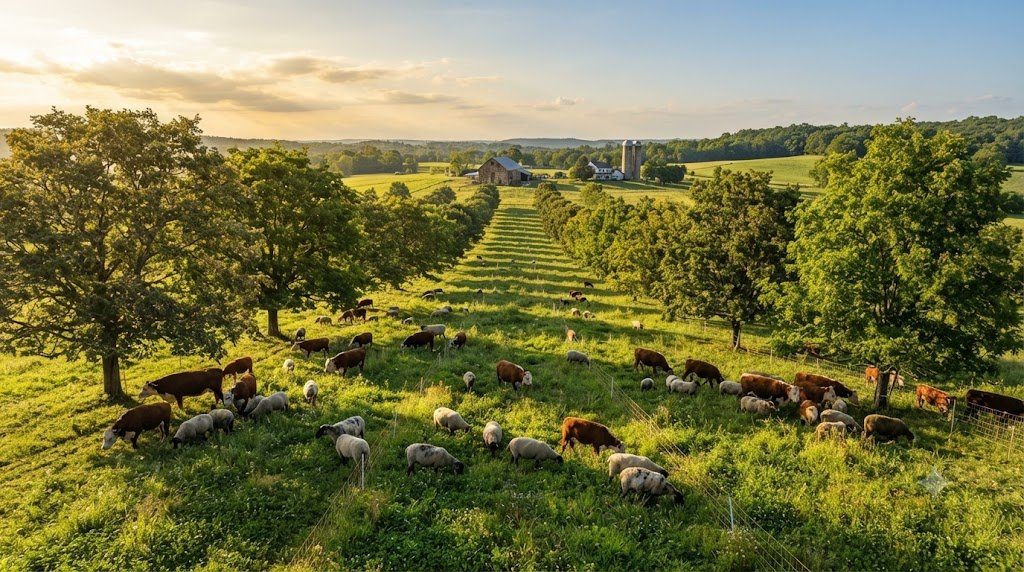
Cattle prefer tall, vegetative grasses, sweeping broad mouthfuls into their mouths and ignoring short weeds and woody forbs. Sheep follow cattle, selectively clipping fine clovers, dandelions, wild mustard, and dock that cattle refuse to consume. Studies demonstrate that co-grazing one mature cow with two to three ewes increases total meat production per acre by 20% to 25% compared to grazing either species alone, without requiring additional land area or fertilizer inputs.
Furthermore, co-grazing serves as a powerful biological parasite mitigation strategy. The primary parasite of sheep (Haemonchus contortus) cannot survive or reproduce in the bovine gastrointestinal tract, while the primary cattle nematode (Cooperia oncophora) rarely affects sheep. As cattle graze through pastures contaminated with sheep parasite larvae, they ingest millions of sheep larvae, which are digested and destroyed in the bovine rumen, cleansing the pasture for future sheep rotations.
5. Pasture Rest Intervals, Seasonality, and Root Recovery
The duration of paddock rest between grazing events directly dictates forage persistence, total seasonal yield, and weed suppression. Rest intervals must be dynamic, reflecting seasonal temperature and rainfall patterns rather than rigid calendar schedules.
During the rapid ‘spring flush’ of cool-season grasses (April to June), plant cell division is explosive, and pastures recover rapidly; rest intervals should be tight, typically 18 to 24 days. If pasture growth outpaces flock consumption during this window, surplus paddocks should be removed from the grazing rotation and harvested as high-quality wrapped baleage or dry hay.
During the hot, dry midsummer slump (July and August), cool-season grass growth decelerates sharply. Rest intervals must be lengthened to 35 to 55 days to allow plants to rebuild root carbohydrate reserves. Grazing too early during a drought permanently damages the sward, kills beneficial perennial clover crowns, and creates open soil patches that become colonized by invasive annual weeds.
6. Stockpiled Forage Grazing: Extending the Season into Winter
Harvested conserved feed (hay and silage) accounts for over 50% of annual ewe maintenance costs. Extending the grazing season into late autumn and winter via stockpiled forage grazing drastically reduces enterprise winter overhead.
Stockpiled Tall Fescue: Tall fescue (Schedonorus arundinaceus) is the premier forage species for winter stockpiling. Remove sheep from designated fescue pastures in early to mid-August, apply 40 to 60 pounds of nitrogen per acre (or graze clover-rich stands), and allow forage to accumulate undisturbed until November.
Unlike soft cool-season grasses that collapse and rot following hard freezes, tall fescue possesses a waxy cuticle that resists snow compaction and weathering. Following autumn frosts, fescue accumulates high concentrations of soluble sugars, increasing palatability and delivering 12% to 14% crude protein and 60% to 64% TDN throughout December and January. Sheep can easily paw through 4 to 8 inches of loose snow to harvest green stockpiled fescue, eliminating hay feeding until mid-winter.
7. Portable Watering Infrastructure and Mineral Placement
A rotational grazing system is only as flexible as its livestock watering infrastructure. If sheep must walk long distances back to a central barn for water, they create compacted trails, deposit valuable manure nutrients around the central watering trough, and overgraze lanes.
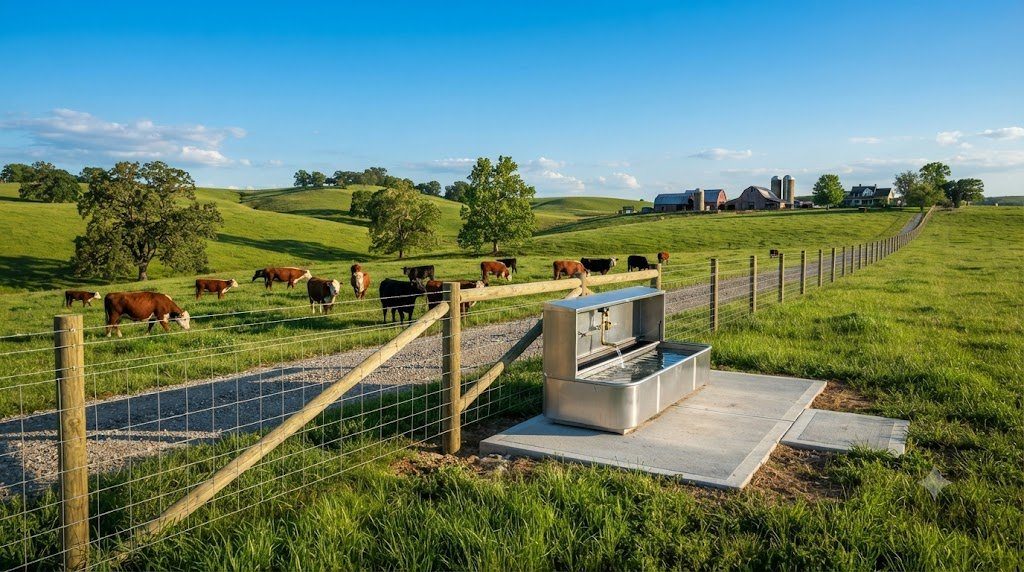
Install a portable water delivery network utilizing 3/4-inch or 1-inch surface high-density polyethylene (HDPE) pipe fitted with quick-coupling female valves every 200 feet along pasture alleyways. Connect lightweight, portable stock troughs (15 to 30 gallons) equipped with high-flow, low-pressure float valves (such as Jobo or Hudson valves). Move the water trough into each new paddock with every flock rotation.
Strategically positioning the portable water trough and mineral feeder in the least-grazed corners or brushy edges of the paddock encourages sheep to utilize the entire paddock uniformly, preventing patchy grazing and maximizing forage harvest efficiency.
8. Grazing Economics, Fertilizer Elimination, and Carbon Sequestration
Management-intensive Grazing transforms farm financial performance by substituting animal harvest labor and natural biological cycles for expensive purchased inputs and machinery operation.
In continuous grazing systems, livestock deposit 80% of their manure and urine in shade zones, under trees, and around water tanks, starving open pastures of fertility. In intensive rotational grazing with high stocking densities, manure and urine are distributed uniformly across every square yard of the pasture. A flock of 100 ewes deposits thousands of pounds of organic nitrogen, phosphorus, and potassium annually, completely eliminating the need for expensive synthetic chemical fertilizers.
Furthermore, leaving adequate residual stubble and maintaining deep root systems pumps liquid carbon (root exudates) deep into the soil profile, building stable soil organic matter (SOM). Every 1% increase in soil organic matter enables soil to store an additional 20,000 gallons of water per acre, buffering the farm against severe drought and enhancing ecological resilience.
Rotational Grazing Parameters Across Seasonal Pasture Phases
The following operational matrix delineates target sward heights, rest periods, and stocking benchmarks across the grazing calendar:
Frequently Asked Questions: Practical Livestock Management
❓ How does electric netting prevent sheep from escaping through wool insulation?
Dry sheep wool acts as an electrical insulator, protecting the animal from mild shocks. To be effective, electric netting must be energized with a high-power, low-impedance energizer delivering at least 5,000 to 7,000 volts. When sheep touch the hot wire with their sensitive, uninsulated nose, lips, or ears, the high-voltage pulse penetrates immediately, creating a permanent psychological barrier.
❓ What should I do if my pasture grows faster than my sheep can consume it in spring?
During the rapid spring flush, drop the slowest-recovering 30% to 40% of your paddocks out of the active grazing rotation. Allow these designated paddocks to grow to late-boot or early-heading stage, and harvest them mechanically as high-quality round bale silage (baleage) or dry hay for winter feeding.
❓ Can sheep graze brassicas and annual forage crops safely?
Yes. Annual brassicas (turnips, forage rape, radishes) deliver exceptional energy (>75% TDN) and protein (>18% CP) for autumn lamb finishing. However, introduce sheep gradually over 5 to 7 days with access to dry grass hay to allow rumen microbes to adapt, preventing sulfur-induced polioencephalomalacia and bloat.
❓ How many sheep can graze per acre under intensive rotational management?
Stocking capacity depends on annual precipitation and soil fertility. In humid temperate regions with fertile soils, intensive rotational grazing routinely supports 4 to 6 mature ewes and their lambs per acre across a 210-day grazing season, compared to only 1.5 to 2 ewes under continuous unmanaged grazing.
Summary: Comprehensive Implementation Protocols
To successfully integrate these management practices, livestock producers must balance biological animal needs with physical infrastructure and strict financial accountability. Routine observation, objective record-keeping, and preventative herd health protocols yield sustained enterprise longevity, reduced veterinary interventions, and consistent farm profitability across seasonal cycles.