- Designing well-ventilated, draft-free caprine housing providing 20 to 25 square feet of indoor resting space per mature doe.
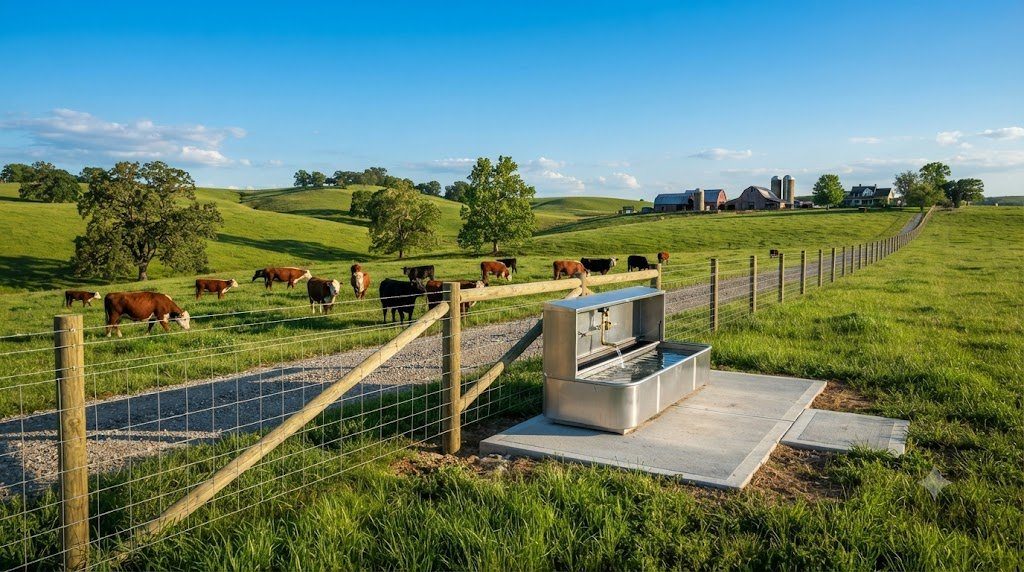
- Selecting and constructing escape-proof fencing systems: 48-inch woven wire, high-tensile electric, and predator aprons.
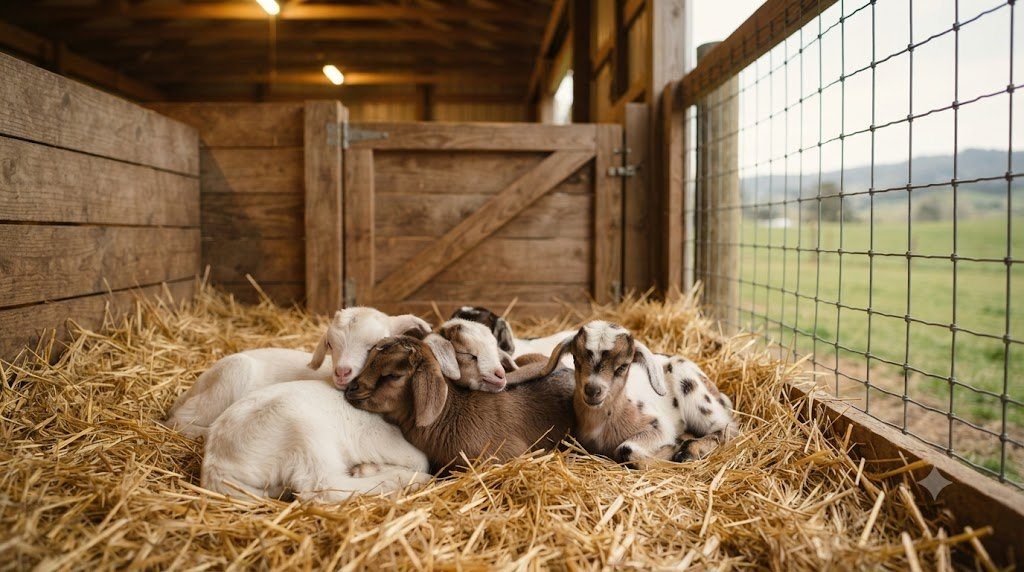
- Setting up dedicated kidding jugs (4×5 ft) with clean straw bedding, infrared heat lamps, and colostrum warming stations.
- Executing low-stress newborn management: umbilical dipping, navel antisepsis, disbudding protocols, and CDT vaccinations.
- Integrating bonded Livestock Guardian Dogs (LGDs) for 24/7 predator defense against coyotes, wolves, and stray dogs.
1. Caprine Housing Engineering: Space Requirements and Ventilation
Goats possess thin hair coats and minimal subcutaneous fat compared to sheep and cattle, making them exceptionally sensitive to damp cold, cold rain, and drafts. While goats adapt readily to freezing temperatures when dry and sheltered, exposure to cold rain combined with wind causes rapid hypothermia and fatal pneumonia within hours.
Housing facilities must provide 20 to 25 square feet of indoor resting space per mature doe, plus an additional 50 square feet of outdoor exercise lot. Housing floors should consist of compacted limestone, well-drained clay, or raised slotted wooden floors. Deep-bedded straw or wood shavings over a hydrated lime base absorbs moisture and creates biological warmth as the lower bedding layers ferment.
Ventilation design is paramount. Goats produce high volumes of moisture in their expired breath, and caprine urine contains concentrated urea that rapidly breaks down into airborne ammonia gas. Ammonia concentrations above 10 ppm damage the respiratory mucosal cilia, predisposing animals to acute Pasteurella and Mannheimia pneumonia. Barns must feature continuous ridge vents, open eaves, and adjustable sidewall curtains that maintain constant chimney-effect air exchange without creating drafts at animal eye level.
Raised Sleeping Platforms and Feed Bunk Design
Goats have an innate behavioral desire to seek elevated resting positions. Installing sturdy wooden sleeping benches or platforms raised 12 to 18 inches off the ground increases effective floor space, satisfies natural climbing instincts, and keeps animals off cold, damp bedding.
Feeders must be engineered to prevent waste and contamination. Goats will refuse to eat forage that has fallen to the floor or been stepped on. Install ‘keyhole’ or slanted-bar hay feeders with solid feed troughs below to catch dropped leaves. Feed bunks must be elevated so goats cannot climb into them or defecate in the forage.
Ensure solid barn walls extend at least 4 feet up from the floor. Air inlets must enter high above the animals’ heads to ensure fresh air circulates through the rafters without dropping cold drafts directly onto resting does and kids.
2. Escape-Proof Fencing Engineering: Woven Wire, High-Tensile, and Panels
Containing goats is one of the most demanding physical challenges in livestock agriculture. An ancient farming adage states: ‘If a fence won’t hold water, it won’t hold a goat.’ Goats explore their environment using physical pressure, horns, and climbing agility, actively seeking low spots, loose wires, and corner openings.
The premier physical perimeter fence is 48-inch woven wire field fence featuring 4×4-inch or 6×6-inch mesh openings. A 4×4-inch mesh is vastly superior because horned goats cannot stick their heads through and become trapped. Secure woven wire to heavy wooden posts driven 3 feet into the ground at 12 to 16-foot intervals, backed by solid H-brace corner assemblies.
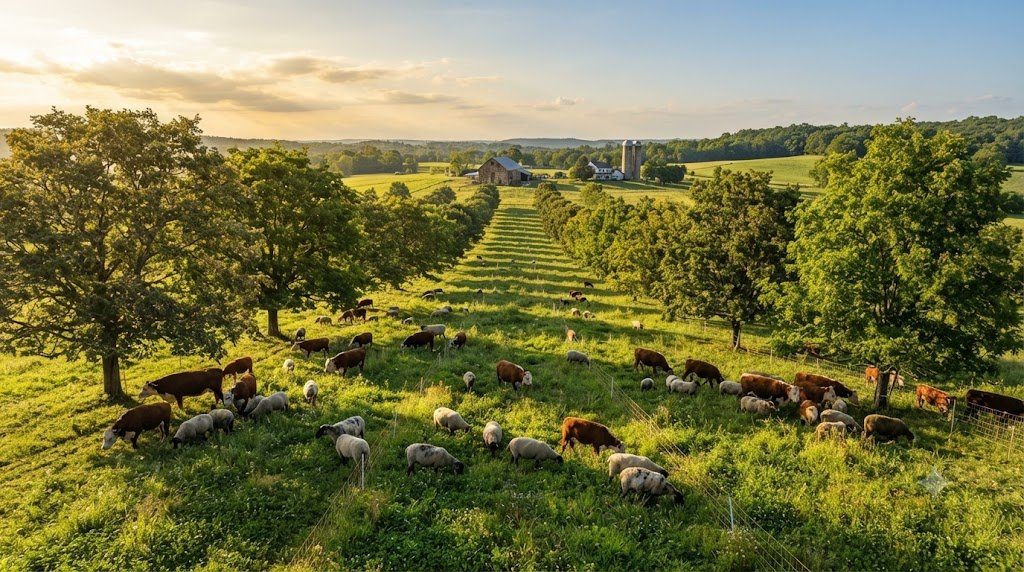
High-tensile electric fencing is an outstanding, cost-effective alternative for rotational pasture subdivisions. Install a minimum of 5 to 6 strands of 12.5-gauge high-tensile wire, alternating hot and ground wires (bottom wire at 6 inches, top wire at 46 inches). Energize the fence with a low-impedance charger producing a minimum of 6,000 to 8,000 volts with at least 6 to 12 joules of stored energy; high voltage is mandatory to penetrate dense caprine hair coats.
3. Predator Defense Architecture: Fencing Aprons and Livestock Guardian Dogs
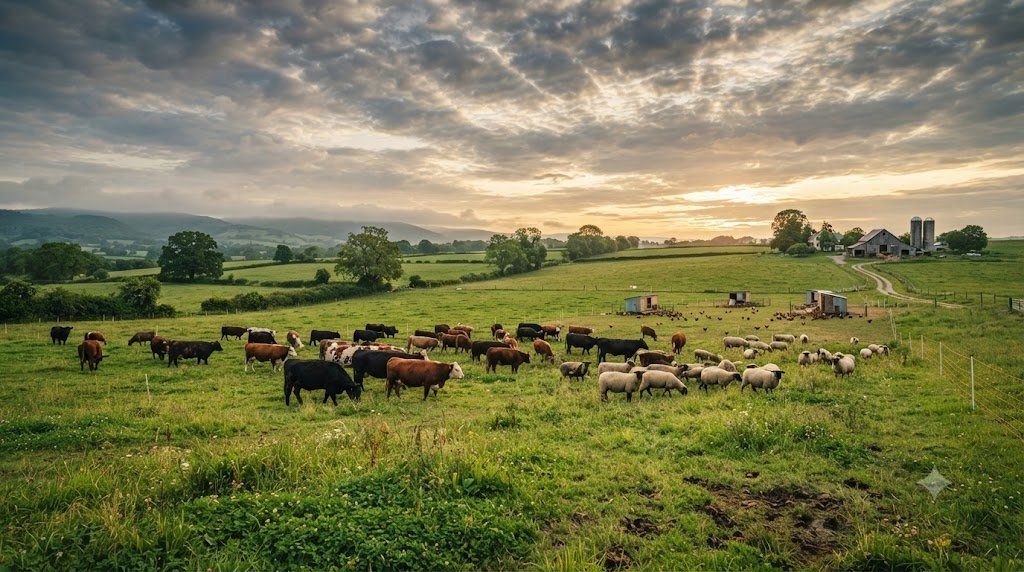
Predation by coyotes, feral dogs, bobcats, and wolves accounts for over 70% of goat kid mortality in extensive grazing systems. Complete predator defense requires integrating physical barriers with biological deterrents.
To prevent predators from digging beneath perimeter fences, install a predator apron—a 24-inch wide strip of galvanized wire mesh laid flat on the ground along the exterior base of the fence and secured with landscape staples. Grass rapidly grows through the mesh, anchoring it permanently; digging predators strike the wire barrier and abandon excavation.
The gold standard biological defense is integrating Livestock Guardian Dogs (LGDs). Breeds such as the Great Pyrenees, Anatolian Shepherd, Akbash, and Kangal possess instinctive guarding behaviors rather than herding drives. Pups must be bonded with goat kids starting at 8 to 12 weeks of age, learning to view the goats as their pack. A bonded pair of adult LGDs creates a continuous territorial defense perimeter, barking warnings, scent-marking boundaries, and physically confronting predators, eliminating losses entirely.
4. Kidding Season Preparation and Maternity Infrastructure
Preparation for kidding season begins 4 weeks prior to the first projected delivery date. Administer a booster vaccination of Clostridium perfringens Types C & D and Tetanus toxoid (CDT) to all pregnant does 30 days before kidding. This timing ensures peak maternal antibody concentration in the colostrum to protect newborn kids.
Construct dedicated individual kidding pens—known as jugs—measuring 4×5 or 5×5 feet. Equip each jug with drop-down wooden hurdles or lightweight steel panels, clean straw bedding, a secure water bucket hung at shoulder height (to prevent newborn kids from drowning), and a corner mineral feeder.
Assemble an emergency obstetric kit containing: clean towels, 7% tincture of iodine, umbilical clamps, bulb syringes for airway clearance, sterile obstetrical lubricant, sterile sleeves, non-spermicidal antiseptic scrub, digital thermometer, Pritchard nipple bottles, and an esophageal feeding tube for weak kids.
5. Labor, Delivery, and Obstetric Intervention Guidelines
Normal labor progresses through three clinical stages: cervical dilation (restlessness, vocalization, nesting), active fetal expulsion (hard abdominal contractions, water bag emergence), and placental expulsion. In normal anterior presentation, the kid’s two front hooves emerge first, soles pointing downward, with the muzzle resting between the knees.
Intervention is required if the doe experiences hard straining for more than 30 minutes without progress, if only one leg presents, if the head is retained back over the shoulder, or if the hooves emerge with soles pointing upward (indicating posterior presentation).
Wash the doe’s vulva and your gloved hands thoroughly with chlorhexidine scrub. Gently lubricate the birth canal and palpate to determine presentation. If correcting a retained head or leg, gently push the kid back into the uterus between contractions to create working space before carefully guiding the head and limbs into the pelvic inlet. Apply gentle traction synchronously with the doe’s contractions.
6. Neonatal Resuscitation, Navel Antisepsis, and Colostrum Protocols
Immediately upon delivery, elevate the kid’s chest and clear mucous from nostrils and mouth using a clean towel and suction bulb. Vigorously rub the body with dry straw to stimulate circulation and respiration. Dip the umbilical cord completely in 7% tincture of iodine within 15 minutes of birth, ensuring the solution reaches the abdominal wall.
Newborn kids must consume 10% of their body weight in high-quality caprine colostrum within the first 6 hours of life (approx. 2 to 3 ounces per pound of body weight). Colostrum provides vital maternal antibodies, Vitamin A, and energy to prevent hypothermia.
If a kid is weak, chilled, or fails to nurse vigorously, check rectal temperature with a digital thermometer. If body temperature is below 100°F (37.8°C), do NOT feed milk or tube feed immediately. A hypothermic kid cannot digest milk; feeding a cold kid causes abomasal fermentation, gas bloating, and fatal enterotoxemia. Warm the kid first in an incubator or with warm towels until temperature reaches 101°F before administering warm colostrum via esophageal tube.
7. Disbudding, Castration, and Routine Neonatal Processing
Routine kid processing procedures must be executed during the first 1 to 3 weeks of life to minimize pain, stress, and complications.
Disbudding (Horn Removal): Dairy goats and commercial market kids should be disbudded between 4 and 10 days of age (bucks earlier than does due to faster horn bud growth). Utilize an electric cautery dehorner (e.g., Rhinehart X30) heated to cherry-red (approx. 1,000°F). Apply the heated iron over the horn bud for 4 to 6 seconds until a uniform copper-colored ring is achieved. Never overheat or press excessively, as the caprine skull is thin and excess heat transfers to the brain, causing thermal meningitis.
Castration: Castrate non-breeding male kids between 7 and 14 days of age utilizing elastrator rubber rings or an emasculatome (Burdizzo). Verify that both testicles are fully descended into the scrotum before releasing the ring. Ensure all kids receiving elastrator bands have received maternal colostral tetanus antibodies or receive 150 units of Tetanus Antitoxin at banding.
8. Weaning Transition and Kid Nursery Management
Weaning kids at 60 to 75 days of age requires a structured nutritional transition to prevent post-weaning growth checks and coccidiosis outbreaks.
Introduce high-protein (18% to 20% CP) textured calf or goat starter grain and leafy alfalfa hay in a dedicated creep feeding area accessible only to kids via a narrow creep gate. When kids are consistently consuming at least 0.5 pounds of starter grain daily, milk or nursing access can be safely phased out over a 7-day period.
Maintain recently weaned kids in clean, dry nursery pens with access to outdoor paddocks. Provide continuous access to fresh clean water, loose goat mineral, and ensure grain feeds contain a preventative coccidiostat (decoquinate or lasalocid). Monitor kids daily for signs of rough hair coats, diarrhea, or lethargy, executing rapid diagnostic interventions to maintain uninterrupted average daily gains.
Goat Facility Engineering and Kidding Management Standards
The following technical specifications outline spatial, environmental, and management benchmarks for commercial goat housing and kidding facilities:
Frequently Asked Questions: Practical Livestock Management
❓ Why is deep-bedded pack management beneficial for winter goat housing?
The deep-bedding pack system involves adding clean dry straw or shavings continuously over manure layers throughout winter. Microbial fermentation in the bottom anaerobic layers generates biological heat (pack temperatures reach 80°F to 100°F), creating a warm resting surface that protects goats from freezing ground temperatures.
❓ What should I do if a newborn goat kid has a body temperature below 99°F?
A kid with rectal temperature below 99°F (37.2°C) is in severe hypothermia. Never tube feed cold milk, as the abomasum cannot digest it. Warm the kid immediately in an enclosed warming box, warm water bath (in a plastic bag to keep dry), or with warm towels until temperature reaches 101°F. Once warm, administer 20% dextrose intravenously or intraperitoneally, followed by warm colostrum.
❓ How can I prevent goats from getting their heads stuck in 6×6-inch woven wire fencing?
Install 4×4-inch mesh woven wire, which is too small for goat heads to penetrate. Alternatively, attach a single electrified offset wire 8 to 10 inches inside the fence at shoulder height, or duct-tape a 10-inch piece of 1/2-inch PVC pipe horizontally across the horns of persistent offenders to physically prevent them from pushing through mesh openings.
❓ What are the essential neonatal vaccinations for goat kids?
The critical neonatal vaccine is Clostridium perfringens Types C & D and Tetanus toxoid (CDT). If the dam was vaccinated 4 weeks pre-kidding, kids receive colostral immunity and need their first CDT dose at 6 weeks of age, followed by a booster at 9 to 10 weeks. If the dam was unvaccinated, administer Tetanus Antitoxin at birth, with CDT vaccination at 3 and 6 weeks.
Summary: Comprehensive Implementation Protocols
To successfully integrate these management practices, livestock producers must balance biological animal needs with physical infrastructure and strict financial accountability. Routine observation, objective record-keeping, and preventative herd health protocols yield sustained enterprise longevity, reduced veterinary interventions, and consistent farm profitability across seasonal cycles.