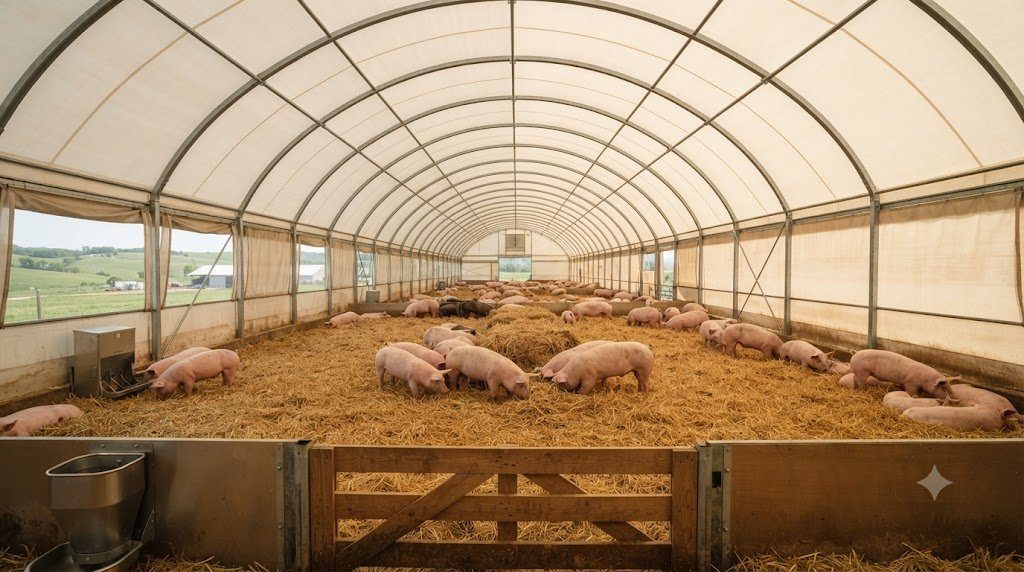
- Designing deep-bedded hoop barns and high-ceiling swine shelters providing continuous thermal comfort and rooting stimulation.
- Managing the carbon-to-nitrogen ratio (30:1) within deep bedded packs to eliminate noxious odors and liquid manure runoff.
- Executing strict biosecurity protocols to protect outdoor herds against African Swine Fever (ASF) and Porcine Epidemic Diarrhea (PEDv).
- Engineering heavy-use sacrifice winter paddocks with geotextile fabric and crushed limestone to prevent mud wallows.
- Transforming spent bedded pack manure into high-value aerobic thermophilic compost for pasture and vegetable soil regeneration.
1. Deep-Bedded Swine Housing Architecture: Hoop Structures and Bedded Packs
Traditional confinement swine production relies on concrete slatted floors suspended over deep anaerobic liquid manure pits. While labor-efficient, liquid manure pits release toxic hydrogen sulfide, methane, and concentrated ammonia gases that damage porcine respiratory tracts and create severe environmental odor conflicts with neighboring communities.
In contrast, regenerative swine housing utilizes deep-bedded hoop barns or high-ceiling pole structures. A hoop barn consists of a heavy-duty arched galvanized tubular steel frame covered with an industrial UV-resistant polyvinyl fabric tarp, erected over a continuous concrete curb or heavy wooden treated post sidewalls.
The housing floor is maintained as a deep carbon bedded pack utilizing 18 to 36 inches of dry, absorbent carbonaceous materials: coarse wood shavings, sawdust, chopped straw, or corn stover. The deep bedded pack completely absorbs all porcine urine and manure, providing pigs with a soft, warm, highly cushioned resting surface that eliminates foot lesions and bursitis while satisfying their instinctive psychological drive to root, dig, and play.
Space Allocations and Ventilation Dynamics in Hoop Barns
Hoop barns for grower-finisher pigs should provide 12 to 16 square feet of bedded floor space per pig, plus dedicated concrete aprons (4 to 6 square feet per pig) for self-feeders and automated waterers. For gestating sows, allocate 24 to 30 square feet per sow.
Natural ventilation in hoop structures is superior to mechanical fans. Open end-walls (equipped with adjustable shade-cloth curtains) combined with continuous ridge openings utilize natural wind and thermal buoyancy to evacuate moisture and air contaminants continuously, maintaining a dry, healthy respiratory environment year-round.
Always position grain feeders and waterers on a raised, solid concrete pad elevated 8 to 12 inches above the bedded pack. Pigs naturally defecate near waterers; keeping waterers on clean concrete prevents wet manure slurry from saturating the dry carbon bedded pack.
2. Bedded Pack Microbiology, Odor Elimination, and Composting in Place
The magic of deep-bedded swine housing lies in the microbial biochemistry of the carbon-to-nitrogen (C:N) ratio. Raw pig manure possesses a low C:N ratio (approx. 8:1 to 10:1), resulting in rapid nitrogen volatilization into pungent ammonia and foul-smelling anaerobic volatile organic compounds.
By continually top-dressing the pen with fresh dry wood shavings or straw (which possess high C:N ratios of 200:1 to 400:1), the overall bedded pack maintains an optimal balanced C:N ratio of approximately 30:1. Aerobic bacteria, actinomycetes, and fungi flourish within the pack, consuming nitrogen and moisture to break down cellulose.
Microbial metabolism within the lower pack layers generates significant biological heat (temperatures inside the pack reach 110°F to 140°F / 43°C to 60°C). This internal heat warms the barn naturally in winter while desiccating manure moisture. As long as fresh carbon is added regularly, a deep-bedded hoop barn housing hundreds of pigs maintains a fresh, earthy forest-floor scent with virtually zero detectable ammonia.
3. Heavy Rooting Management and Sacrifice Paddock Engineering
During prolonged winter rains, spring snowmelts, or drought-induced forage dormancy, keeping pigs on open pastures will destroy delicate soil structure, compact topsoil, and create deep, stagnant mud bogs that erode into local waterways.
Sustainable outdoor systems manage seasonal extremes by moving swine into engineered sacrifice winter paddocks or woodlot yards. A heavy-use sacrifice pad features an engineered base: grade the soil with a 2% slope, lay heavy woven geotextile filter fabric directly over the soil subbase, and cap with 6 to 8 inches of crushed, compacted limestone (#411 or road base aggregate).
Cover the limestone pad with a 12-inch sacrificial layer of wood chips or coarse tree bark mulch. This engineered pad provides rock-solid, mud-free footing that supports heavy tractor traffic, prevents pigs from excavating mud craters, and keeps animals clean and dry during the wettest months of the year while pastures rest.
4. External Biosecurity Protocols: African Swine Fever (ASF) and Viral Defense
Outdoor pastured swine operations face unique biosecurity vulnerabilities due to potential interactions with wild birds, rodents, and feral hogs (feral swine). Feral swine populations in North America and Europe harbor devastating viral pathogens, most notably African Swine Fever (ASF), Porcine Reproductive and Respiratory Syndrome (PRRS), and Pseudorabies (Aujeszky’s Disease).
The foundational biosecurity defense for outdoor pigs is a double-fence perimeter buffer. Install a secure primary exterior fence (48-inch woven wire or chain-link) separated by a mandatory 15 to 20-foot wide cleared buffer zone from the secondary interior pasture fence. This double-fence design completely eliminates nose-to-nose contact and aerosol droplet transmission between domestic pigs and roaming feral swine or wild boars.
Establish a single controlled farm entrance equipped with a vehicular tire disinfection wash station. Mandatory farm policies must prohibit all visitors, international travelers, and feed delivery personnel from entering swine areas without wearing farm-dedicated rubber boots and sanitized coveralls.
5. Rodent and Vector Control in Swine Facilities
Rodents (Norway rats and house mice) represent formidable biological vectors in swine facilities, consuming expensive feed, chewing electrical wiring, and actively transmitting Leptospirosis, Swine Dysentery (Brachyspira hyodysenteriae), and Toxoplasmosis.
Implement an aggressive integrated rodent management protocol: eliminate exterior harborages by mowing grass tight around all barn perimeters and removing brush piles. Store all bulk grain in sealed steel bins mounted on clean concrete pads.
Establish permanent, tamper-resistant rodent bait stations spaced every 30 to 40 feet around the entire exterior barn perimeter, utilizing rotational anticoagulant and non-anticoagulant rodenticides (diphacinone, bromethalin). Inspect and replenish bait stations monthly.
6. Swine Manure Composting: Windrow Engineering and Thermophilic Sanitization
When deep-bedded hoop barns are cleaned out annually (typically in late spring when pigs return to rotational pastures), producers harvest hundreds of tons of pre-composted, nutrient-dense organic matter.
Rather than spreading raw bedded pack directly onto crop fields—which can tie up soil nitrogen and spread weed seeds—process the material through thermophilic windrow composting. Construct long, triangular windrows measuring 6 to 8 feet tall and 10 to 12 feet wide on a well-drained, clay-capped compost pad.
Within 48 to 72 hours, aerobic bacteria initiate intense metabolic heat, raising core windrow temperatures to 135°F to 155°F (57°C to 68°C). Maintain temperatures above 131°F for a minimum of 15 consecutive days, turning the windrows 3 to 5 times with a tractor-mounted compost turner. This sustained thermophilic heat completely destroys all weed seeds, fly larvae, and pathogenic bacteria (Salmonella, E. coli, Erysipelothrix).
Following 8 to 12 weeks of active thermophilic composting and a 4-week curing phase, the material converts into rich, crumbly, dark organic humus that tests high in stable humic acids and organic nitrogen, creating an invaluable soil amendment for farm pastures or a high-value bagged retail product.
7. Mortality Management: Environmentally Compliant On-Farm Composting
Mortality is an unavoidable reality of livestock farming. Traditional mortality disposal methods—such as rendering services (increasingly costly or unavailable) or burial (which risks groundwater contamination and is prohibited in many jurisdictions)—are being replaced by swine mortality composting.
Composting dead livestock is safe, bio-secure, environmentally compliant, and completely eliminates disease transmission. Construct a dedicated mortality composting bin utilizing concrete ecology blocks or heavy treated timber walls under a protective roof.
Establish a 12 to 18-inch base of coarse carbonaceous material (sawdust or wood chips). Lay the carcass flat in the center, and cover completely with a minimum of 18 to 24 inches of sawdust or active compost material, ensuring no limbs or tissues are exposed. The thick carbon bio-filter absorbs all odors, completely deterring scavengers (coyotes, dogs, vultures). Microbial heat liquefies soft tissues within 4 to 8 weeks, leaving only brittle, sterilized bone fragments.
8. Enterprise Economic Value of Deep Bedding and Carbon Cycling
Deep-bedded swine housing delivers exceptional long-term enterprise economic returns by transforming a liability (manure management) into a valuable on-farm asset.
Constructing a high-capacity hoop barn costs approximately 60% less per pig space than building an industrial slatted-floor confinement building with concrete liquid pits. Furthermore, hoop barns are versatile multi-purpose structures; if market conditions shift, a hoop barn can easily be repurposed for sheep housing, hay storage, or machinery machinery storage.
The compost harvested from deep bedded packs replaces thousands of dollars in commercial synthetic fertilizers. A 500-head hoop barn yields approximately 300 tons of premium finished compost annually. Applied to pasture at 2 to 3 tons per acre, this compost increases forage dry matter yields by 30% to 50%, improves water infiltration, and sequesters stable carbon deep in the soil, embodying the true principles of regenerative animal agriculture.
9. Regulatory Permitting, Nutrient Management Plans, and Environmental Compliance
Operating a compliant commercial swine enterprise requires navigating federal, state, and municipal environmental regulations. In the United States, operations exceeding specific animal unit thresholds fall under National Pollutant Discharge Elimination System (NPDES) Concentrated Animal Feeding Operation (CAFO) regulations administered by the EPA. Even small-to-medium scale pastured farms must comply with strict non-point source pollution rules governing surface water discharge and wetland protection.
Every swine producer must develop and maintain a certified Comprehensive Nutrient Management Plan (CNMP) developed with the USDA Natural Resources Conservation Service (NRCS) or certified crop advisors. A CNMP maps farm soil types, calculates exact crop nitrogen and phosphorus uptake rates, and establishes field-specific manure application limits. Applying composted bedded pack manure strictly according to crop phosphorus removal rates prevents excessive soil phosphorus accumulation and eliminates agricultural runoff into regional aquatic ecosystems.
Furthermore, local zoning regulations frequently dictate mandatory setback distances for livestock housing and manure composting pads—typically requiring a minimum buffer of 100 to 300 feet from property boundaries, neighboring residences, domestic water wells, and classified streams. Designing facilities with proactive environmental engineering, vegetative buffer hedges, and comprehensive nutrient records protects the farm from regulatory enforcement while securing long-term community goodwill.
Swine Housing and Composting Operational Parameters
The following architectural, environmental, and microbiological standards define best management practices for deep-bedded swine facilities:
Frequently Asked Questions: Practical Livestock Management
❓ Why is wood shavings preferred over straw for deep-bedded pig housing?
While straw is a good bedding material, kiln-dried wood shavings possess superior absorbency (holding up to 4 times their weight in moisture) and pack more densely, creating a superior carbon filter that traps ammonia. Straw tends to mat and can create wet, slick layers if not chopped finely.
❓ How can I prevent flies from breeding in a deep-bedded swine hoop barn?
Flies breed exclusively in moist, undisturbed manure layers. Maintain a dry pack by adding fresh carbon shavings weekly, ensure watering nipples do not leak onto the bedding, and release biological parasitic wasps (Spalangia endius) monthly during warm weather to naturally destroy fly pupae.
❓ What is the legal distance required between double-fencing for swine biosecurity?
Biosecurity standards recommend a minimum buffer distance of 15 to 20 feet between the exterior boundary fence and the interior pasture fence. This physical separation prevents nose-to-nose contact and aerosol droplet transmission of African Swine Fever from wild boars or feral hogs.
❓ How do I know when swine manure compost is completely finished and safe to apply?
Finished compost has completed its curing phase when core windrow temperatures stabilize at ambient levels (under 90°F) even after turning. The compost should have a dark, crumbly, rich humus appearance with a pleasant earthy forest-floor aroma and zero detectable manure or ammonia odor.
Summary: Comprehensive Implementation Protocols
To successfully integrate these management practices, livestock producers must balance biological animal needs with physical infrastructure and strict financial accountability. Routine observation, objective record-keeping, and preventative herd health protocols yield sustained enterprise longevity, reduced veterinary interventions, and consistent farm profitability across seasonal cycles.